Find your voice.
Own the room.
A free guide to Model United Nations, debate and public speaking. It's made for high school students who are thinking about joining debate, just starting out, or want to debate more, and for anyone who wants to speak with confidence.
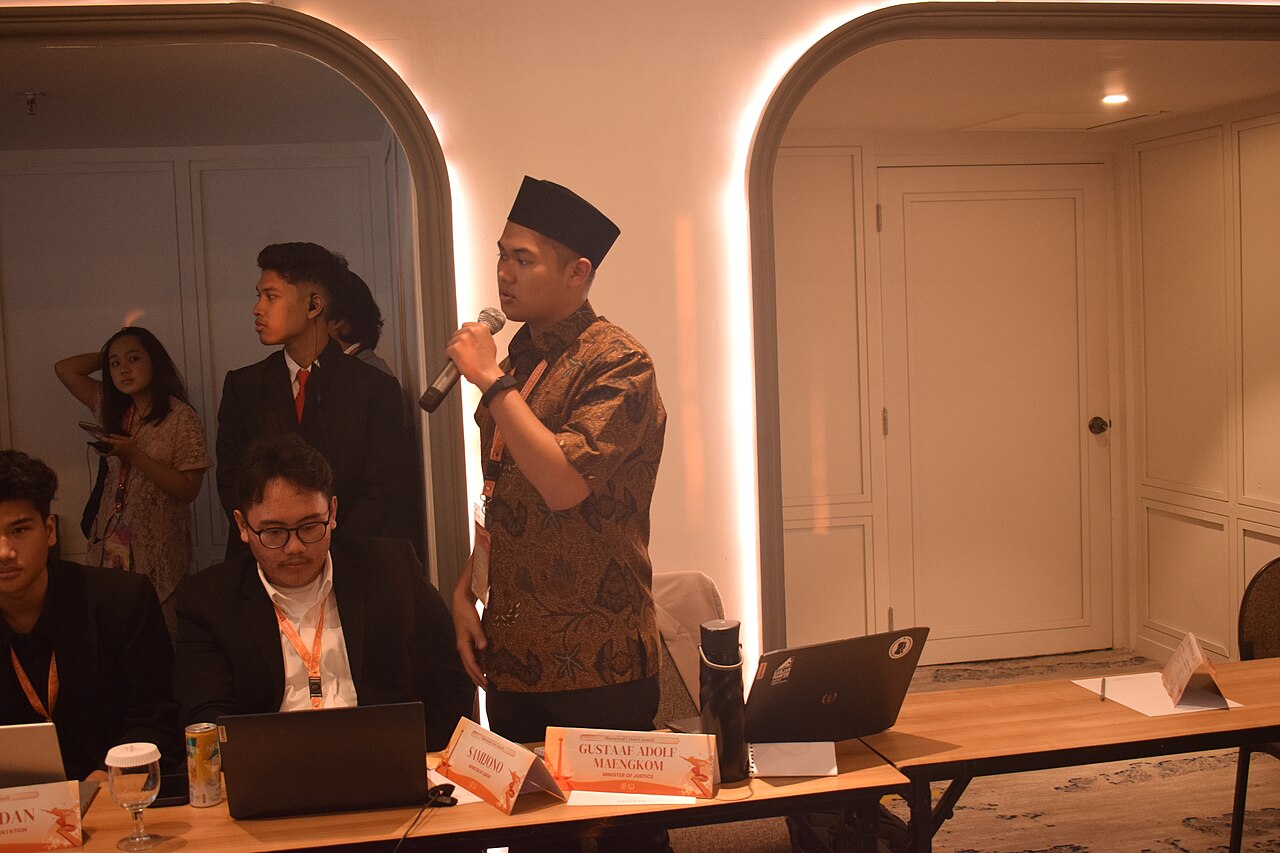
What is debating?
Debating is a structured contest of ideas. Two sides are given a motion, a statement such as “This House would ban homework”, and take turns arguing for or against it under set rules and time limits.
Speakers build arguments, back them up with evidence and examples, and respond directly to the other side's points (called rebuttal). Judges decide which side was more convincing.
It's not about shouting the loudest. Good debaters listen carefully, think quickly and explain clearly.
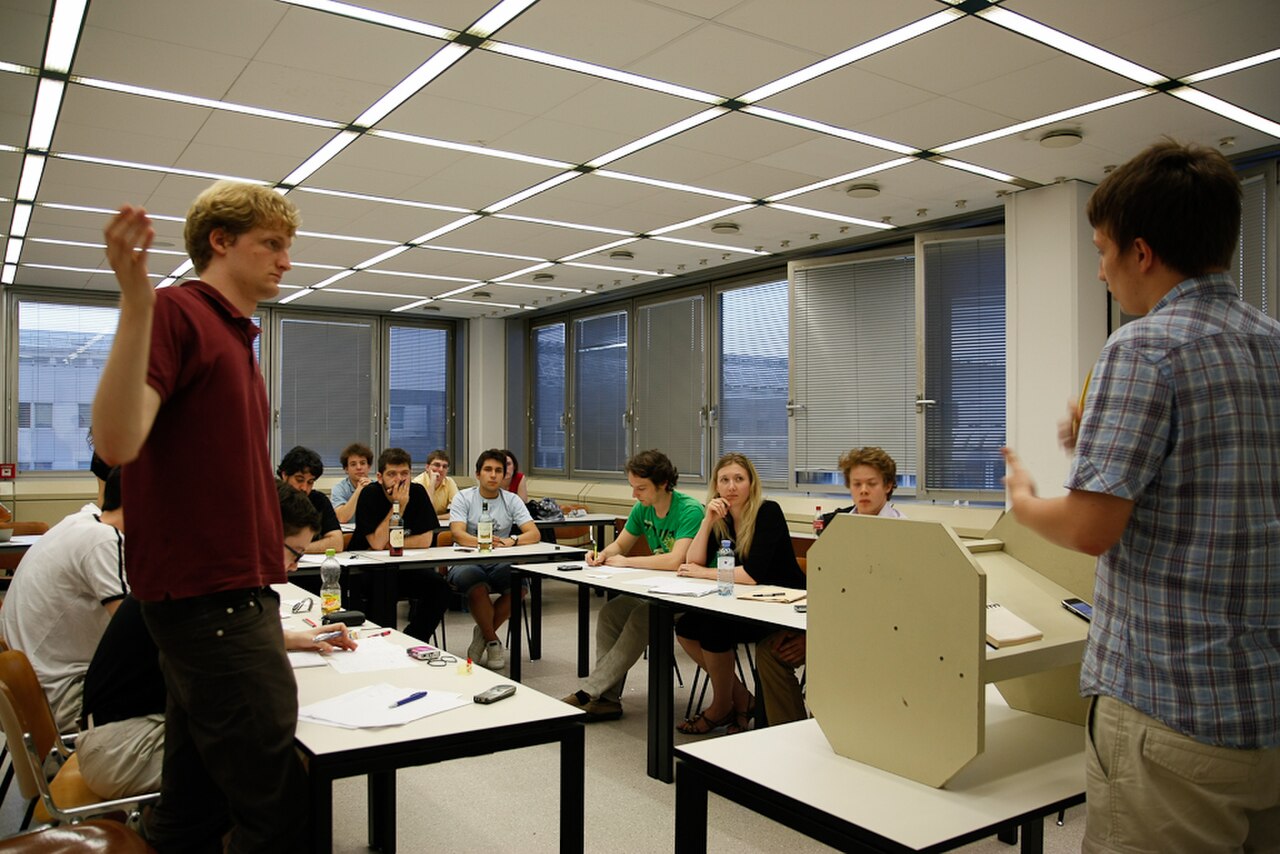
What is public speaking?
Public speaking is delivering a message to an audience, whether it's a class presentation, a speech at a Model UN conference, or a toast at a family event.
Every speech combines three things:
- Content: what you say: your ideas, facts and stories.
- Structure: the order you say it in, so people can follow.
- Delivery: how you say it: voice, pace, eye contact and body language.

How debating and public speaking help you
These are the skills you practise every time you prepare a case, give a speech or sit in a committee.
Critical thinking
You learn to test ideas, spot weak arguments and see an issue from more than one side.
Research skills
Preparing a position means finding reliable sources and picking the evidence that matters.
Confidence
Speaking regularly in front of others makes it feel less frightening.
Active listening
You can't rebut what you didn't hear. Debate trains you to listen closely and take notes.
Teamwork
Debate teams and MUN blocs only succeed when people share ideas and work together.
Global awareness
Model UN and the World Scholar's Cup push you to learn about countries, cultures and world issues.
What the research says
Most studies come from urban debate programmes in the United States.
The rating the U.S. Department of Justice's CrimeSolutions gives Urban Debate League programmes for high school students, noting gains in school engagement, reading and writing.
Source: CrimeSolutions (OJP)
A 10-year study of the Chicago Debate League found a statistically significant positive effect on high school graduation rates.
A University of Michigan study of Houston students linked debate participation with higher GPAs, SAT scores and college readiness.
Source: NAUDL (study co-sponsor)
Note: these studies compare students who chose debate with students who didn't, so part of the difference may come from who signs up. See Sources.
Start learning
Model UN (THIMUN)
A complete guide: roles, committees, preparation, resolutions and every rule of procedure.
Start →World Scholar's Cup
Subjects, rounds, Team Debate, Collaborative Writing, Scholar's Challenge and Scholar's Bowl.
Start →World Schools (WSDC)
Format, speaker roles, POIs, motions, preparation and judging.
Start →Asian Parliamentary
Government vs Opposition: roles, speaking order, replies and judging.
Start →British Parliamentary
Four teams, two per side: roles, extensions, POIs and how teams are ranked.
Start →Public Forum
Two-on-two debate with crossfire: speeches, timing, prep time and evidence.
Start →Public Speaking
Structure, delivery, practice drills and six great public speakers.
Start →Glossary & Phrases
Every MUN term and phrase in one place.
Start →Ready for your first committee?
Start with the MUN overview and you'll know exactly what to expect from your first THIMUN conference.